Interested in learning more about heat pumps? There’s lots to learn! They are increasingly popular through the northeast (especially in Maine) and Vermont has the highest rate of heat pumps per capita in New England. For a more global lens of the applications heat pumps, check out this video.
How do they work?
Although there are several types of heat pumps, they all function similarly! What makes heat pumps unique is that their functionality is not to create heat but instead they transfer it in or out of the home using a refrigerant. During the winter, the pump pulls heat from the air outside and sends it inside. This may seem counter intuitive, as the air outside can be extremely cold! Heat pumps extract heat from cold outdoor air by compressing it and sending the warm air inside. Then, the pump takes air from indoors and expands it to make it colder to send back to the exterior pipe, attracting heat from outdoors. During the summer, the same process is reversed; the pump pulls heat from inside and sends it outside to cool your home.
For a quick, visual explanation, watch this video. To dig a little deeper, check out this 10-minute video.
How efficient are heat pumps?
The Vermont Department of Public Service conducted a study on heat pumps, investigating the energy consumption and performance of cold-climate heat pumps in Vermont. They also examined the increase/decrease in average electricity consumption and fossil fuel use. According to the study, the average winter efficiency, (the ratio of heat output to energy input), of cold climate heat pumps in Vermont was found to be extremely efficient – 314%. It is important to note that maximum efficiency can only be achieved with a correctly sized heat pump system and a fully weatherized home.
Which type of heat pump is best for my home?
Differentiating between the heat pump types can seem complicated at first, but there are a few basic types to be aware of:
- Air-source heat pumps
- Geothermal heat pumps
- Air to water heat pumps
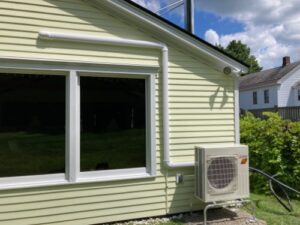
Air-source heat pumps are the most common choice. As their name implies, they use ambient air to heat and cool the home. Additionally, these high-efficiency heat pumps can also remove humidity more effectively than standard central air conditioners.
- Ducted air-source heat pumps can be installed and connected to conventional forced-air ductwork that is typical in American homes.
- Ductless air-source heat pumps, also known as mini-split heat pumps, are a good choice for homes without ducts, or to target singular areas in a home. These are the most affordable type of heat pump and the easiest to install.
Geothermal heat pumps, also known as ground-source or water-source heat pumps utilize the relatively consistent temperature of the ground to transfer heat between the home and the ground or water. Due to the additional needs of installation, there are higher costs associated as well as a number of considerations when planning the system (lot size, soil type, etc). Generally once installed, they have lower operational costs and can be highly efficient even in more extreme climates.
- For a comprehensive academic guide to geothermal heat-pumps, you can read this article published in Managing Global Warming.
Air to water heat pumps provide an all-in-one solution to heating, cooling, and hot water supply. Like air source heat pumps, air to water heat pumps draw heat from outdoor air, but instead of warming the air inside, they deliver the heat via water piped throughout the home.
- Read more on the Mass Save air to water heat pump guide.
A great resource for more information is the Department of Energy’s guide on all heat pump types. When choosing a heat pump, it is important to consult with a professional HVAC technician to ensure that you purchase the correct size and model for your home. However, it can be helpful to review the options beforehand with your Energy Navigator.
Which heat pumps are eligible for rebates?
It’s important to keep in mind that only certain models of heat pumps are eligible for rebates. Rebate-eligible models are those that are higher efficiency and suited for colder temperatures. In the Northern United States, heat pumps must be Energy Star Cold Climate with an Energy Efficiency Ratio greater than 10.
For some additional information on the types of cold climate heat pump models you can check out:
How much maintenance do heat pumps require?
Generally, heat pumps require very little maintenance. Follow your heat pump’s manual for specific instructions for your model. During installation, your heat pump technician can walk you through basic maintenance steps to optimize efficiency. However, a heat pump of the wrong size could risk reducing energy efficiency and increasing maintenance costs.
Do heat pumps need backup in extreme cold?
According to Efficiency Vermont and Efficiency Maine, new model cold climate heat pumps that are properly sized can heat a with external temperatures are down to -22 °F, regardless of wind chill. However, it is noted that heat pump performance and efficiency declines below 0 °F. Read here about how heat pumps performed in Maine’s cold snap of 2023.
Many people opt to keep a backup system for the coldest weather. This backup system can depend on your home’s existing infrastructure (e.g. you already have a wood stove). Similarly, a few small electric baseboard or electric panel heaters controlled by a thermostat can provide very low cost backup (particularly if they are kept off when the heat pump is operating efficiently).
Will insurance companies insure my home if it is heated exclusively by heat pumps?
Many insurance companies will cover a home heated solely by a heat pump. However, policies may require certain models, and some insurance companies require a backup source of heating. Read this summary on heat pump coverage by the Vermont Department of Financial Regulation.
If heat pumps are so great, why aren’t they more popular?
A huge limiting factor for widespread heat pump installation is a lack of contractors who are experts in heat pumps. Your Energy Navigator can help you get connected with knowledgeable contractors in the area. To learn more about the existing dearth of service providers, listen to this 10-minute podcast.
Wanting to dig in more?
Check out these peer-reviewed articles proving the benefits of heat pumps:
Sources referenced: